
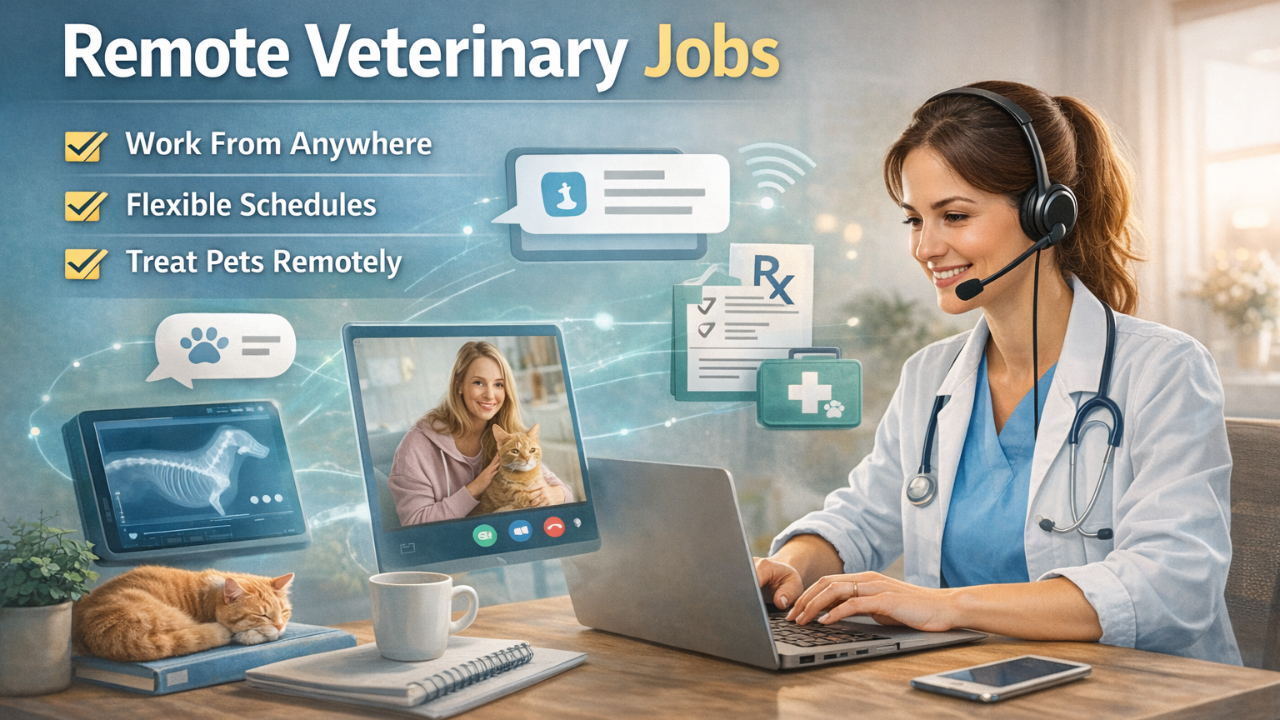
Remote Veterinary Jobs: Growing Opportunities in Telemedicine and Virtual Animal Care
Apr 13, 2026The veterinary profession has expanded beyond traditional clinic walls, and remote veterinary jobs now offer licensed veterinarians opportunities to provide telemedicine consultations, medical writing, case reviews, and consulting services from anywhere. Multiple platforms list hundreds of remote veterinary positions, with some job boards showing over 60,000 openings across the United States.
I've observed that remote veterinary work appeals to professionals seeking better work-life balance, reduced commute times, and geographic flexibility. Companies like Chewy have created virtual veterinary careers focused on patient care, while telehealth platforms such as Telavets actively hire remote veterinarians to deliver accessible pet healthcare through telemedicine technology.
The growth in remote vet jobs spanning telehealth, consulting, and writing reflects changing demands in animal healthcare delivery. Whether you're considering transitioning from traditional practice or exploring supplemental income opportunities, understanding the landscape of remote veterinary positions helps you make informed career decisions.

Key Takeaways
- Remote veterinary jobs include telemedicine consultations, medical writing, case reviews, and consulting roles that allow work from any location
- Hundreds of companies and platforms now hire remote veterinarians with competitive compensation and flexible scheduling options
- Licensed veterinarians can find full-time, part-time, and freelance remote positions across various specialties in the veterinary field
Types of Remote Veterinary Jobs
The veterinary field now offers diverse remote work opportunities spanning clinical care, technology, sales, and administrative functions. These positions allow veterinary professionals to leverage their expertise while working from home or other locations outside traditional clinic settings.
Telemedicine Opportunities
Telemedicine represents one of the fastest-growing segments of remote veterinary jobs. In these roles, I provide virtual consultations to pet owners, assess symptoms through video calls, and offer treatment recommendations without in-person examinations. Licensed veterinarians conduct follow-up appointments for established patients, triage urgent cases to determine if emergency care is needed, and prescribe medications within telehealth regulations.
Virtual veterinary positions through companies like Chewy enable me to practice medicine while focusing on patient and pet parent care. I guide pet owners through non-emergency situations, review diagnostic results, and provide second opinions on treatment plans. Many telemedicine roles require an active veterinary license and strong communication skills to effectively diagnose ailments remotely.
Veterinary Technology and IT Roles
Veterinary technology positions in remote settings focus on supporting digital infrastructure for animal health organizations. I work on developing and maintaining practice management software, implementing electronic medical record systems, and providing technical support to veterinary clinics. These roles require understanding both veterinary workflows and information technology systems.
IT specialists in the veterinary field troubleshoot software issues for remote veterinary teams and train staff on new digital tools. I may also work on cybersecurity measures to protect patient data or develop mobile applications for pet health monitoring. Some positions involve:
- Database management for veterinary research
- Telehealth platform development
- Integration of diagnostic equipment with digital systems
- Technical writing for veterinary software documentation
Remote Sales and Outside Sales Representative Positions
Outside sales representative roles in veterinary medicine involve promoting pharmaceutical products, medical equipment, and practice supplies to clinics and hospitals. While these positions include outside sales activities requiring travel to visit clients, much of my work occurs remotely including client outreach, virtual product demonstrations, and account management.
I build relationships with veterinary practices through video conferences, manage territories from my home office, and coordinate product deliveries. Sales positions in animal health require knowledge of veterinary products and the ability to communicate technical information to practitioners. Compensation typically includes base salary plus commission on sales performance.
Administrative and Support Roles
Administrative positions provide essential remote work support to veterinary practices and animal health companies. I handle appointment scheduling, insurance claims processing, and client communications through phone and email. These roles require familiarity with veterinary terminology and practice management systems.
Remote administrative staff manage medical records, coordinate referrals between specialists, and process billing for veterinary services. I may work as a virtual receptionist answering client questions, or in human resources recruiting veterinary professionals. Some positions focus on content creation for veterinary websites, social media management for animal hospitals, or customer service for pet insurance companies.
Remote Work in the Veterinary Industry
The veterinary field has expanded beyond traditional clinic settings, with professionals now providing telemedicine consultations, advisory services, and specialized support from home offices. Current job markets show hundreds of available positions spanning clinical telehealth, consulting roles, and administrative support functions.
Growth and Demand for Remote Positions
I've observed significant expansion in remote veterinary opportunities over recent years. Job platforms currently list 300 remote veterinary positions available as of April 2026, representing diverse specializations and employment types.
The demand spans multiple categories beyond direct patient care. I find opportunities in telemedicine consultations, veterinary writing, consulting services, and corporate roles with animal health companies. Major retailers like Chewy now offer virtual veterinary careers that focus on pet parent communication and patient care through digital platforms.
Industry job boards show 200 remote positions across the United States, with new listings added daily. Sales representatives, telehealth veterinarians, and industry consultants make up substantial portions of these openings.
Remote Work Benefits and Flexibility
Remote veterinary positions offer location independence that traditional clinic roles cannot match. I can work from anywhere in the country while maintaining my veterinary license and professional responsibilities.
Remote veterinary jobs provide flexible arrangements including telecommuting, part-time schedules, full-time positions, and freelance contracts. This variety allows me to balance personal obligations with professional commitments more effectively than fixed clinic schedules.
The elimination of commute time represents a practical advantage. I save hours weekly while reducing transportation costs and workplace-related expenses. Home office setups also provide control over my work environment, which many veterinarians find reduces stress compared to busy clinic settings.
Required Qualifications and Licensing
Remote veterinary positions require active veterinary licenses to provide telemedicine consultations and prescribe medications. I must maintain licensure in states where I practice, even when conducting virtual appointments.
Most employers expect the same educational credentials required for in-person roles: a Doctor of Veterinary Medicine (DVM) degree from an accredited institution. Additional certifications in specific areas like emergency medicine or internal medicine can strengthen applications for specialized remote positions.
Technical proficiency becomes essential for remote work. I need reliable internet connectivity, familiarity with veterinary technology platforms, and comfort conducting video consultations. Some positions require experience with specific telehealth software or electronic medical record systems.
Compensation and Benefits for Remote Veterinary Roles
Remote veterinary positions offer competitive compensation packages that typically include base salaries, comprehensive health coverage, and retirement planning options. Understanding these financial components helps veterinary professionals evaluate opportunities and negotiate fair terms.
Salary Expectations and Commission Structures
Compensation ranges for veterinarian roles generally fall between $123,000 and $179,500 annually for non-toxicology positions, though exact figures vary by specialty and location. Remote roles often use different pay structures than traditional in-clinic positions.
Some employers offer base salaries plus performance bonuses tied to consultation volume or client satisfaction metrics. Others provide commission-based compensation for telemedicine veterinarians who conduct virtual appointments. I've found that remote customer service representatives and veterinary technicians typically earn hourly wages ranging from $15 to $28 per hour, depending on experience and certifications.
Geographic salary adjustments may apply based on where you live, even in remote positions. Employers calculate these using cost-of-labor indices for your area.
Benefits Packages: Health, Vision, and Life Insurance
Most full-time remote veterinary positions include comprehensive health insurance with medical, dental, and vision insurance coverage. Employers typically cover 70-90% of premiums for individual plans, with family coverage available at additional cost.
Life insurance benefits commonly include employer-paid basic coverage equal to one or two times annual salary. I can usually purchase supplemental life insurance for myself and dependents through payroll deductions. Short-term and long-term disability insurance protects income if injury or illness prevents me from working.
Additional perks often include continuing education allowances, professional license reimbursement, and mental health support services. Some organizations offer pet care discounts or veterinary service benefits for personal animals.
Retirement Options: 401(k) and Matching
Remote veterinary employers frequently provide 401(k) retirement plans with company matching contributions. Standard matching formulas include 50% of contributions up to 6% of salary or dollar-for-dollar matches up to 3-4%.
I typically become eligible for enrollment after 30-90 days of employment, though vesting schedules for employer contributions vary. Some companies offer immediate vesting, while others use graded schedules over 3-5 years. Traditional and Roth 401(k) options allow me to choose pre-tax or post-tax contribution strategies based on my financial situation.
Frequently Asked Questions
Remote veterinary positions require specific credentials and technical capabilities depending on the role. Licensing requirements vary by state for clinical work, while administrative and support positions often prioritize communication skills and familiarity with veterinary practice management software.
What qualifications and licensure are typically required to work from home in veterinary medicine?
For licensed veterinarians providing telemedicine consultations, I need an active veterinary license in the state where my patient is located. Some states have specific telemedicine regulations that require an established veterinarian-client-patient relationship before I can legally prescribe medications remotely.
Credentialed veterinary technicians working in remote positions typically need to maintain their state licensure or certification. The requirements depend on whether I'm providing direct patient care guidance or handling administrative tasks like client communication and appointment coordination.
Non-clinical roles such as customer service representatives or scribes usually don't require veterinary licensure. However, having veterinary assistant certification or previous clinic experience strengthens my application and helps me understand the terminology and workflow.
Which non-clinical roles are most common for veterinary professionals who want to work remotely?
Veterinary customer service representatives handle client inquiries, schedule appointments, and manage prescription refill requests for telehealth platforms and large veterinary organizations. These positions allow me to use my animal health knowledge without performing clinical duties.
Medical records specialists and veterinary scribes document patient encounters, code procedures, and manage electronic health records from home. I can find these administrative roles at multi-location practices and corporate veterinary groups that need consistent documentation across their facilities.
Telemedicine triage specialists assess incoming cases and determine urgency levels before connecting clients with veterinarians. Insurance claims processors and veterinary sales representatives also work remotely, applying clinical knowledge to business functions.
What does a typical day look like for a remote veterinary receptionist, and what skills are essential?
My day as a remote veterinary receptionist involves answering phone calls and online chat messages from pet owners seeking appointments or asking basic questions about their pets' care. I schedule virtual consultations, send appointment reminders, and coordinate follow-up communications between veterinarians and clients.
I spend significant time managing practice management software to update client records, process payments, and send prescription information to pharmacies. Strong multitasking abilities help me handle multiple communication channels simultaneously while maintaining accuracy in scheduling and data entry.
Technical proficiency with video conferencing platforms, electronic medical records systems, and customer relationship management tools is essential. I also need excellent written communication skills since much of my client interaction happens through email and chat rather than face-to-face conversations.
What are the usual responsibilities and tools used by a remote veterinary assistant in a telehealth setting?
Remote veterinary assistants support telemedicine consultations by preparing digital case files, gathering medical history from clients before appointments, and ensuring all necessary information is available to the consulting veterinarian. I coordinate with pet owners to obtain photos, videos, or previous medical records that help the veterinarian make informed recommendations.
During live telehealth appointments, I may assist with technical troubleshooting when clients have difficulty connecting to the video platform. I also help guide pet owners through at-home physical examination techniques when the veterinarian needs to assess specific symptoms remotely.
My daily tools include veterinary practice management software, secure messaging platforms, video conferencing applications, and cloud-based file storage systems. I use these technologies to maintain HIPAA-compliant communication and accurate documentation of all client interactions.
How do remote veterinary scribe positions work, and what experience do employers prefer?
As a remote veterinary scribe, I listen to live telemedicine consultations or review recorded appointments and create detailed medical records in real-time or shortly after each visit. I document the chief complaint, history, physical examination findings, assessment, and treatment plan in the practice's electronic health record system.
Employers typically prefer candidates with previous veterinary clinic experience because I need to understand medical terminology, common diagnoses, and standard treatment protocols. My familiarity with SOAP note formatting and veterinary abbreviations allows me to produce accurate records quickly without constant supervision.
I work with transcription software, veterinary-specific medical record templates, and sometimes voice recognition tools to increase efficiency. Strong attention to detail and fast, accurate typing skills are critical since I often document multiple appointments per hour.
Where can I find legitimate part-time opportunities in remote veterinary work, and how can I avoid scams?
I can find legitimate remote veterinary opportunities on established job boards like Indeed, LinkedIn, and specialized veterinary career sites. Corporate veterinary groups, telehealth platforms, and pet insurance companies regularly post part-time remote positions on their career pages.
Professional organizations such as the National Association of Veterinary Technicians in America and state veterinary medical associations often share verified job listings with members. Networking through veterinary conferences and online professional groups also connects me with real opportunities shared by colleagues.
Red flags for scams include job postings requiring upfront payment for training or equipment, requests for personal financial information before a formal offer, and vague job descriptions without company details. Legitimate employers clearly identify their organization, provide detailed role descriptions, and conduct proper interviews before making offers.

