
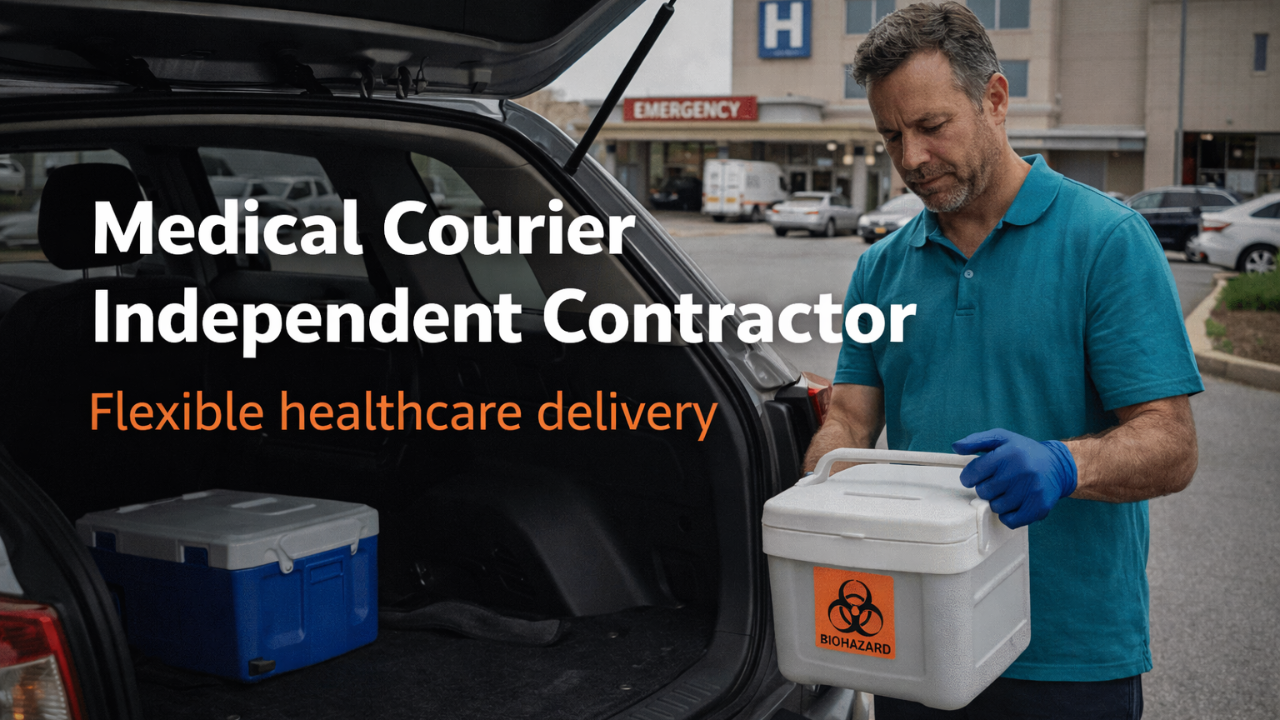
Medical Courier Independent Contractor: Essential Guide to Starting Your Healthcare Delivery Business
Feb 17, 2026Medical courier work offers a flexible career path for those who want to control their own schedule while providing essential healthcare services. A medical courier independent contractor transports medical supplies, laboratory specimens, pharmaceuticals, and healthcare documents between facilities while working on a contract basis rather than as a traditional employee. This role requires reliability, attention to detail, and adherence to strict handling protocols to ensure patient safety and confidentiality.
The demand for medical courier independent contractors continues to grow as healthcare facilities rely on timely delivery of critical materials. I find this field particularly appealing because it combines independence with meaningful work that directly impacts patient care. Whether you're considering this as a full-time business or supplemental income, understanding the requirements and operations is essential for success.

Companies like All-Med Express and USPack actively seek independent contractors who value professionalism and efficiency. The barrier to entry is relatively low compared to other businesses, making it accessible for those with a reliable vehicle and proper insurance. I'll walk you through everything you need to know to start and grow your own medical courier business.
Key Takeaways
- Medical courier independent contractors transport healthcare materials while maintaining their own business and schedule flexibility
- Starting requires a reliable vehicle, proper insurance, HIPAA knowledge, and contracts with healthcare facilities or courier companies
- Success depends on maintaining professionalism, managing expenses carefully, and building relationships with multiple clients for steady income
What Is a Medical Courier Independent Contractor?
A medical courier independent contractor transports time-sensitive healthcare materials while maintaining their own business operations. These professionals handle specialized deliveries that require strict compliance with healthcare regulations and confidentiality standards.
Medical Courier Role and Responsibilities
As a medical courier independent contractor, my duties focus on the transport and delivery of medical documents, records, lab specimens, test results, medical supplies, and medications. I maintain documentation for every delivery and ensure patient confidentiality throughout the transportation process.
The work involves more than standard courier services. I must handle biological specimens with care, maintain proper temperature controls when required, and follow chain-of-custody protocols. Medical courier jobs demand punctuality since delayed lab specimens can compromise test accuracy or patient diagnoses.
I interact with hospitals, clinics, laboratories, pharmacies, and patient homes regularly. Each stop requires verification of delivery details and often signatures from authorized personnel. The role also includes understanding medical terminology to properly identify and handle different types of specimens and supplies.
How Independent Contracting Differs from Employment
Working as an independent contractor rather than a full-time employee changes the business relationship fundamentally. I operate my own courier business, which means I set my own schedule and accept contracts from multiple healthcare facilities or courier companies.
I am responsible for my own vehicle maintenance, fuel costs, insurance, and business expenses. Unlike traditional delivery driver positions, I don't receive employee benefits such as health insurance, paid time off, or retirement contributions. I must also handle my own tax obligations, including quarterly estimated tax payments and self-employment taxes.
The trade-off is flexibility and autonomy. I choose which contracts to accept and can work with multiple courier services simultaneously. This arrangement allows me to scale my business up or down based on my financial goals and personal schedule preferences.
Key Skills for Medical Couriers
Success in this field requires a valid driver's license and a reliable vehicle as foundational requirements. I need strong time management abilities since medical deliveries operate on strict schedules where delays can affect patient care.
Attention to detail is critical. I must verify specimen labels, maintain proper documentation, and follow specific handling instructions for different materials. HIPAA compliance knowledge protects patient privacy during every delivery.
Previous delivery experience helps but isn't always mandatory. What matters more is my ability to navigate efficiently, communicate professionally with healthcare staff, and handle sensitive materials responsibly. Physical stamina is necessary since the job involves frequent stops with loading and unloading throughout the day.
How to Become a Medical Courier Independent Contractor
Starting as an independent contractor in medical courier services requires meeting specific legal requirements and having reliable transportation with proper insurance coverage. Most contractors need to be at least 21 years old and complete certification courses that can take up to 90 days.
Steps to Getting Started
The first step I take when becoming a medical courier is obtaining a valid driver's license and ensuring my driving record is clean. I need to be at least 21 years old in most cases to qualify for this work.
Next, I complete required certifications including HIPAA compliance training and bloodborne pathogen courses. These certifications typically take between a few days to 90 days to complete depending on the program.
I then register my business and obtain necessary permits. This includes applying for a business license in my jurisdiction and registering as a 1099 medical courier independent contractor. I also set up a business bank account to manage my own business finances separately from personal accounts.
Building relationships with healthcare facilities is essential. I reach out to hospitals, laboratories, doctor's offices, and pharmacies to secure contract work and establish myself as a reliable contracted driver.
Licensing, Certifications, and Background Checks
I must complete HIPAA certification to legally handle protected health information during medical deliveries. This training teaches me proper protocols for maintaining patient confidentiality and securing sensitive materials.
Bloodborne pathogen certification is required since I transport lab specimens and biological materials. This course covers safety procedures for handling potentially infectious substances.
Background checks are mandatory for medical courier work. Healthcare facilities require clean criminal records before allowing access to their facilities and materials. I submit to fingerprinting and comprehensive background screening as part of the application process.
Some states require additional certifications or permits for transporting medical waste or controlled substances. I research my local regulations to ensure full compliance with all applicable laws.
Vehicle Requirements and Insurance
I need my own vehicle that's reliable and well-maintained for medical courier work. The vehicle must have adequate space for secure transport of medical specimens, documents, and supplies in temperature-controlled containers when necessary.
Essential Insurance Coverage:
- Commercial auto insurance
- General liability insurance ($1-2 million recommended)
- Cargo insurance for medical materials
- Workers' compensation (if applicable)
Standard personal auto insurance doesn't cover commercial activities, so I upgrade to a commercial policy. This protects me from liability related to vehicle expenses and accidents that occur during deliveries.
I keep detailed maintenance records and ensure my vehicle meets cleanliness standards required by healthcare facilities. Many clients inspect vehicles before approving contracts to verify proper conditions for transporting medical materials.
Working as a 1099 Medical Courier
As a 1099 medical courier independent contractor, I operate as my own business entity rather than a traditional employee. This arrangement affects how I file taxes, manage my schedule, and structure my workday.
Understanding 1099 Status
When I work as a 1099 independent contractor, I'm classified differently than regular employees. The IRS defines independent contractors as professionals in an independent trade or business who offer services to the general public.
As a contractor driver, I receive a 1099-NEC form instead of a W-2 at tax time. This form reports my annual earnings from each client I work with. I'm responsible for providing my own vehicle, fuel, insurance, and any equipment needed for medical deliveries.
The key distinction is control. I determine how I complete my delivery routes and when I accept assignments. My clients specify what needs to be delivered and when, but I decide the methods and means of transportation. This independence is what legally separates me from employee status.
Tax Considerations for Independent Contractors
I pay both the employer and employee portions of Social Security and Medicare taxes, totaling 15.3% through self-employment tax. Unlike employees who have taxes withheld from each paycheck, I'm responsible for calculating and paying quarterly estimated taxes to the IRS.
Key tax obligations include:
- Quarterly estimated tax payments (April 15, June 15, September 15, January 15)
- Self-employment tax on net earnings
- Income tax on profits after business deductions
I can deduct business expenses like vehicle mileage (67 cents per mile in 2026), phone costs, insurance, and supplies. These deductions reduce my taxable income significantly. I track every delivery mile and keep receipts for all business-related purchases. Setting aside 25-30% of my gross income for taxes helps me avoid surprises at tax time.
Scheduling and Flexibility
The flexibility of working as a 1099 medical courier allows me to choose which routes I accept and when I work. I can decline assignments without penalty, though building relationships with regular clients requires reliability.
I typically set my availability through courier platforms or directly with medical facilities. Some days I work traditional business hours, while other times I take late-night or weekend shifts that pay premium rates. This autonomy lets me balance personal commitments with income goals.
However, flexibility comes with responsibility. I must maintain consistent availability to keep steady work flowing. Medical facilities need dependable couriers for time-sensitive deliveries of specimens, medications, and supplies.
Daily Operations and Best Practices
As a medical courier independent contractor, I handle time-sensitive deliveries that require careful attention to safety protocols, proper handling techniques, and efficient route planning. My daily work involves transporting medical specimens, navigating both local routes and airport recovery assignments, and maintaining strict compliance with healthcare regulations.
Types of Medical Deliveries
I transport various categories of medical materials throughout my workday. Medical specimens include blood samples, tissue biopsies, urine samples, and other diagnostic materials that require temperature-controlled transport and careful handling. I also deliver pharmaceuticals, medical equipment, patient records, and laboratory results to hospitals, clinics, diagnostic centers, and patient homes.
Each delivery type has specific requirements. Blood samples typically need refrigeration between 2-8°C, while some specimens require frozen transport. I use coolers with ice packs or specialized temperature-controlled containers depending on the material. PRN medical courier work means I'm often on-call for urgent deliveries that can't wait for scheduled routes.
Patient services deliveries include prescription medications, medical supplies, and durable medical equipment directly to homes. These require additional attention to patient privacy and often involve doorstep drop-offs with photo confirmation or signature collection.
Navigating Local Routes and Airport Recovery
I optimize my local routes using GPS navigation and delivery management apps that account for traffic patterns and time-sensitive priorities. I group deliveries by geographic area when possible, but medical courier work often requires immediate single-stop runs for stat orders.
Airport recovery is a specialized aspect of my work that involves picking up medical shipments arriving via air cargo. I monitor flight schedules and coordinate with cargo terminals to retrieve packages immediately upon arrival. This requires airport security credentials and familiarity with cargo facility procedures at my local airports.
I maintain relationships with airline cargo staff to expedite the tendering process. Time is critical with airport recovery since these shipments often contain specimens with short viability windows or urgent patient needs.
Loading, Unloading, and Package Handling
I load and unload packages systematically to prevent damage and maintain proper temperature control. I place temperature-sensitive items in insulated containers first and position them where they won't shift during transport. Heavy items go on the bottom, and fragile materials are secured separately.
I verify each package's contents, destination, and special handling requirements before loading. I use a checklist system to confirm I have all necessary documentation, including chain-of-custody forms for specimens. During transport, I avoid sudden stops or sharp turns that could damage specimens or compromise sample integrity.
When I unload packages at medical facilities, I follow their specific receiving protocols. Some locations require deliveries to specific departments or refrigerators, while others have central receiving areas. I always obtain delivery confirmation through signatures or electronic proof of delivery.
Ensuring Safety and Compliance
I follow OSHA bloodborne pathogen standards and use personal protective equipment when handling potentially infectious materials. I wear gloves for all specimen handling and maintain hand sanitizer in my vehicle. My vehicle contains spill cleanup kits with absorbent materials, disinfectants, and biohazard bags.
HIPAA compliance is mandatory in my work. I never discuss patient information, keep packages secured and out of view, and ensure all paperwork remains confidential. I lock my vehicle when making deliveries and never leave medical materials unattended.
I maintain detailed delivery logs with pickup times, delivery times, and recipient signatures. These records protect me legally and help medical facilities track their specimens through the standard procedures for medical courier services. I inspect my vehicle daily for cleanliness and proper equipment function, replacing ice packs and sanitizing containers between uses.
Income, Expenses, and Business Growth
Medical courier earnings vary based on route density and hours worked, while vehicle costs represent the largest overhead expense. Strategic planning around efficient operations and gradual expansion can transform a modest side hustle into a full-scale business.
Typical Pay and Salary Expectations
Independent medical couriers typically earn between $35,000 and $80,000 annually depending on geographic location, route density, and time commitment. I've found that medical courier salaries depend heavily on whether you work full-time or maintain a part-time Monday through Friday schedule with an occasional short Saturday route.
Per-delivery rates range from $8 to $25, with specialized services like laboratory specimens commanding premium prices. Route-based contracts often pay $100 to $300 per day for established territories. Medical facilities in urban areas generally offer higher compensation due to increased delivery volume and tighter time windows.
Many courier contractors start with part-time routes to test profitability before committing to full-time operations. A typical part-time schedule might include morning hospital rounds and afternoon clinic deliveries, generating $500 to $800 weekly. Full-time independent medical couriers working six days can exceed $1,500 per week during peak periods.
Tracking Expenses and Maximizing Profits
Vehicle expenses consume 40% to 60% of gross revenue for most courier contractors. Fuel costs average $300 to $600 monthly, making fuel-efficient vehicles essential for maintaining profitability. I recommend tracking mileage meticulously since it qualifies as a tax-deductible business expense at the standard IRS rate.
Insurance premiums for commercial courier coverage typically run $150 to $300 monthly depending on coverage limits and driving history. Maintenance costs including oil changes, tire rotations, and brake service add another $100 to $200 monthly for active routes.
Smart contractors reduce overhead by choosing fuel-efficient vehicles like hybrid sedans or compact SUVs that balance cargo capacity with lower operating costs. Planning efficient routes minimizes unnecessary mileage and maximizes deliveries per gallon. I calculate profit margins by subtracting all vehicle expenses, insurance, and licensing fees from gross receipts to determine true take-home income.
Scaling Your Courier Business
Growth opportunities for independent medical couriers include adding service territories, hiring additional drivers, or specializing in high-value medical transport. I start by establishing consistent relationships with multiple healthcare facilities to ensure steady workflow before expanding operations.
Adding a second vehicle and contractor requires careful analysis of whether additional routes generate sufficient revenue to cover extra insurance and driver payments. Many successful courier businesses scale by securing exclusive contracts with hospital networks or laboratory chains that guarantee minimum weekly volumes.
Specialization in temperature-controlled specimen transport or pharmaceutical delivery commands premium rates but requires investment in proper equipment and additional certifications. I've seen contractors double their income by focusing on niche services rather than general medical delivery.
Opportunities and Challenges in Medical Courier Contracting
The medical courier contracting field presents distinct pathways for finding work and building a business, while also requiring careful consideration of both benefits and limitations. Current industry dynamics shape how independent contractors navigate this specialized logistics sector.
Finding Courier Jobs and Contracts
I can access medical courier contractor opportunities through multiple channels. General delivery platforms and specialized websites connect independent contractors with part-time and full-time assignments. Organizations like the World Health Organization issue RFPs for courier services globally, expanding potential markets beyond local healthcare facilities.
Established medical courier companies actively seek independent contractors to expand their networks. Companies like All-Med Express recruit business partners who own or operate courier businesses, including those willing to establish self-employed entities such as LLCs.
Direct outreach to healthcare facilities remains effective. I can approach hospitals, laboratories, pharmacies, and medical practices to establish contracts. Building relationships with healthcare administrators and demonstrating reliability often leads to steady work. Some contractors also pursue contracts with last mile delivery companies that service both medical and retail sectors.
Advantages and Drawbacks of the Role
Key Advantages:
- Schedule flexibility and route control
- Lower startup costs compared to traditional businesses
- Direct involvement in healthcare delivery
- Potential for business growth and expansion
The independent contractor model offers autonomy in daily operations. I set my own hours, choose which contracts to accept, and manage my business operations. This flexibility appeals to those seeking work-life balance or supplemental income.
Notable Challenges:
- Responsibility for vehicle maintenance and fuel costs
- Self-funded health insurance and retirement planning
- Income variability between contracts
- Liability exposure requiring adequate insurance coverage
I must handle all business expenses without employer support. Vehicle upkeep, insurance premiums, and equipment costs directly impact profitability. Tax obligations also differ from traditional employment, requiring quarterly estimated payments and detailed record-keeping.
Industry Trends and Future Outlook
Healthcare logistics continues expanding as medical testing and home healthcare services grow. Demand for specimen transport, prescription delivery, and medical equipment distribution increases year over year.
Technology integration reshapes how I manage driver jobs and routing. GPS tracking, digital proof-of-delivery systems, and automated dispatch platforms improve efficiency. These tools help independent contractors compete with larger logistics companies while maintaining compliance with healthcare regulations.
Specialized services command premium rates. Contractors handling time-sensitive materials, temperature-controlled shipments, or hazardous substances earn higher compensation. The field rewards those who invest in proper training, certifications, and equipment upgrades to meet stricter healthcare standards.
Frequently Asked Questions
Medical courier independent contractors face unique requirements ranging from valid licenses and proper insurance to understanding tax obligations and state-specific regulations. Compensation structures typically involve per-delivery payments or route-based earnings, while finding opportunities requires strategic networking and utilizing multiple job search channels.
What are the requirements to become a medical courier independent contractor?
I need a valid driver's license and a reliable vehicle to start working as a medical courier independent contractor. Most positions require a clean driving record and the ability to pass a background check.
Knowledge in medical terminology helps me understand the materials I'm transporting. I must obtain proper business paperwork and insurance coverage before accepting contracts.
OSHA Bloodborne Pathogen Standard training is essential for handling medical specimens safely. This training covers administrative requirements, record-keeping, and terminology specific to the healthcare industry.
How does compensation typically work for medical courier independent contractors?
I typically earn money on a per-delivery basis or through route-based compensation. Payment structures vary depending on the courier company or healthcare facility I contract with.
As a 1099 contractor, I'm responsible for my own taxes throughout the year. I don't receive traditional employee benefits like health insurance or paid time off.
My earnings depend on factors like delivery volume, distance traveled, and the urgency of shipments. I can often increase my income by accepting more deliveries or working during high-demand periods.
What are the best practices for finding medical courier independent contractor opportunities?
I find medical courier jobs through online job boards and courier company websites that list contractor or driver opportunities. Directly contacting local healthcare providers and labs often yields additional prospects.
Industry networking helps me discover unadvertised positions. I also monitor healthcare facilities in my area for transportation logistics needs.
I review independent medical courier contracts carefully before signing to understand payment terms and responsibilities. Building relationships with multiple healthcare facilities helps me maintain a steady stream of work.
Can medical couriers work as independent contractors across different states, such as Florida or Georgia?
I can work as a medical courier independent contractor in different states, but I must comply with each state's specific regulations. State licensing requirements, insurance minimums, and business registration rules vary by location.
Operating across state lines requires me to understand both states' legal requirements. I need to verify that my vehicle insurance covers operations in multiple states.
Some healthcare facilities only contract with couriers who have local addresses or state-specific certifications. I research each state's Department of Transportation and health department regulations before expanding my service area.
What tools or apps do medical courier independent contractors use to manage their deliveries?
I use GPS navigation apps to optimize my routes and ensure timely deliveries. Route planning software helps me manage multiple stops efficiently.
Delivery tracking apps allow me to provide real-time updates to healthcare facilities. I often use mileage tracking applications for accurate record-keeping and tax deduction purposes.
Digital signature capture tools help me document proof of delivery. Temperature monitoring devices are essential when I transport specimens that require specific storage conditions.
What are the legal considerations for operating as an independent contractor in the medical courier industry?
I must understand my tax obligations as a 1099 independent contractor, including quarterly estimated tax payments. Proper classification as an independent contractor rather than an employee affects my legal status and tax responsibilities.
I need adequate liability insurance and commercial auto insurance to protect myself and my clients. HIPAA compliance is mandatory when handling patient information or medical records.
Maintaining proper contracts with each client protects my rights and clarifies expectations. I keep detailed records of all deliveries, expenses, and income for tax purposes and potential audits.

