
How to Improve Your Inside Sales Hiring Process for SDRs and AEs: A Startup Guide to Building High-Performing Sales Teams
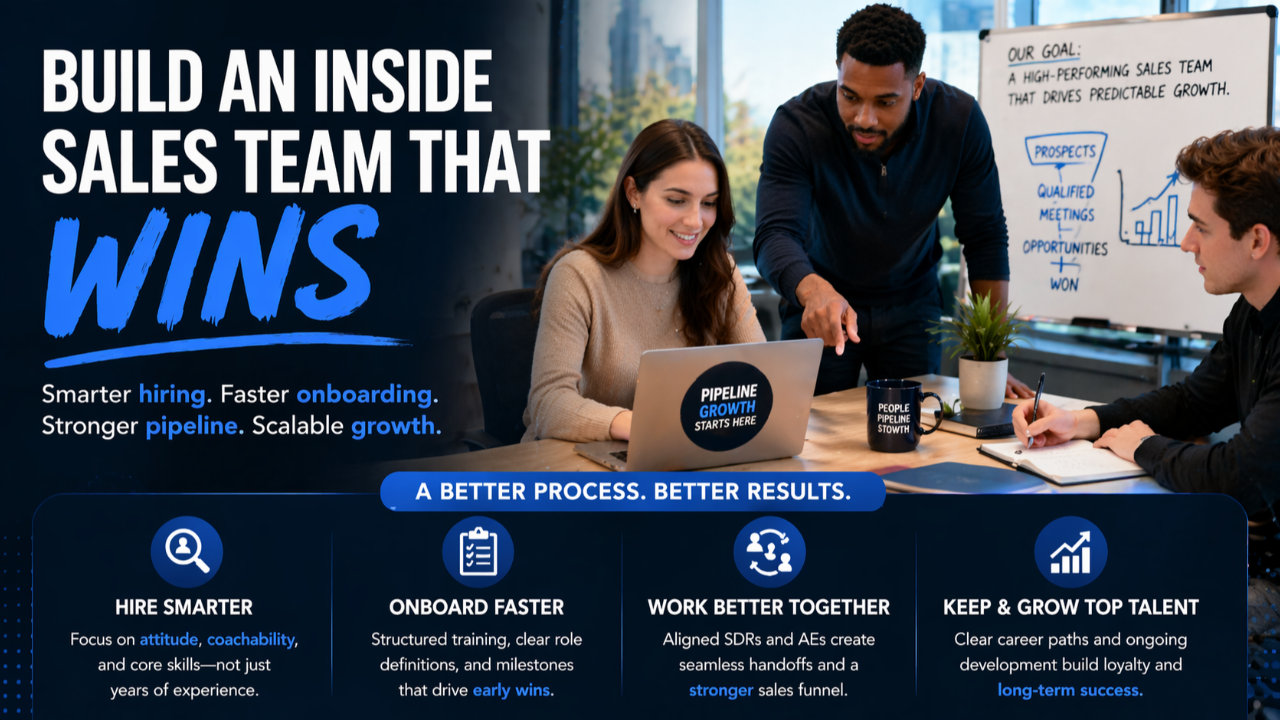
Apr 07, 2026The difference between a startup that scales predictably and one that struggles often comes down to how well they hire and develop their inside sales team. To improve your inside sales hiring process for SDRs and AEs, you need to shift focus from experience-based screening to evaluating attitude, coachability, and core competencies while building a structured onboarding framework that gets reps productive in weeks rather than months. Most startups waste months and significant revenue by treating sales hiring like any other role, but building an effective inside sales team requires a specialized approach.
I've seen too many early-stage companies lose their best candidates to competitors or watch new hires churn out within six months because they lacked a repeatable hiring and training system. The quality of your onboarding experience determines whether a sales rep ramps quickly or struggles for months. When you're operating with limited resources, every hiring mistake costs you pipeline momentum and team morale.
This guide walks through the specific frameworks I recommend for screening candidates, structuring your interview process, and building training programs that actually work. You'll learn how to identify the right mindset and skills in candidates, create role clarity between SDRs and AEs, and establish metrics that predict long-term success.
Key Takeaways
- Focus your hiring on attitude and coachability rather than years of experience to find SDRs and AEs who will actually succeed
- Build a structured onboarding program that includes clear role definitions, training milestones, and collaboration between SDRs and AEs
- Implement retention strategies and career pathing early to reduce turnover and maintain consistent pipeline performance
Defining SDR and AE Roles in Inside Sales
SDRs focus on the top of the sales funnel by generating and qualifying leads, while AEs take over qualified opportunities to close deals. Understanding these distinct responsibilities helps startups build efficient inside sales teams that maximize pipeline velocity.
Core Responsibilities of SDRs and AEs
Sales Development Representatives operate at the beginning of the sales cycle. I've found that SDRs specialize in lead generation, qualifying prospects, and setting appointments for Account Executives.
Their daily activities include:
- Cold outreach via email, phone, and social media
- Lead qualification using frameworks like BANT or MEDDIC
- Appointment setting with qualified prospects
- CRM data management to maintain pipeline accuracy
Account Executives handle the middle and bottom of the funnel. They conduct discovery calls, run product demonstrations, and negotiate contracts. AEs need strong negotiation, presentation, and relationship-building skills to understand client needs and close sales.
The SDR to AE career path represents a natural progression in SaaS sales organizations. Internal promotions from SDR to AE typically cost 50-60% less than external hiring while building institutional knowledge.
SDR vs BDR: Key Differences
Business Development Representatives and SDRs perform similar prospecting functions, but their focus differs. SDRs typically handle inbound leads and respond to prospects who have shown interest in your product. They qualify these warm leads and move them through the pipeline.
BDRs concentrate on outbound prospecting to target accounts. They identify new market opportunities and reach out to prospects who haven't engaged with your company yet. This requires more research and strategic account planning.
Some startups use these titles interchangeably, while others maintain distinct roles based on lead source. The key difference lies in whether the rep works primarily with inbound interest or creates outbound opportunities from scratch.
How SDRs and AEs Support the Sales Funnel
Dividing sales teams into distinct roles streamlines the funnel by allowing specialization at each stage. SDRs own the top of the funnel, generating qualified leads that meet specific criteria before handoff.
The handoff between SDR and AE represents a critical transition point. I've seen many sales leaders struggle to keep SDRs and AEs aligned, which creates friction and lost opportunities.
Account Executives receive qualified leads and move them through evaluation, negotiation, and closing stages. They conduct demos, address objections, and build relationships with decision-makers. This specialization prevents the burnout that occurs when one person handles prospecting, qualifying, and closing simultaneously.
Clear role definition ensures the SDR/AE model works effectively by reducing overlap and establishing accountability at each funnel stage.
Structuring an Effective Inside Sales Hiring Process
A structured hiring process helps me identify top-performing SDRs and AEs while reducing time-to-hire and minimizing costly bad hires. I focus on defining clear skill requirements, crafting targeted job descriptions, and implementing systematic screening methods.
Identifying Required Skills and Qualities
I start by separating foundational skills from role-specific competencies when evaluating sales talent. For SDRs, I prioritize resilience, coachability, and comfort with high-volume cold outreach activities. These reps spend most of their time on cold calling and booking meetings, so I look for candidates who demonstrate persistence and handle rejection well.
For AEs, I need different qualities. I assess consultative selling abilities, deal management experience, and the capacity to navigate complex sales cycles. While SDRs focus on appointment setting, AEs must close revenue.
Core SDR competencies I evaluate:
- Activity consistency in cold outreach
- Quick learning and adaptation to feedback
- Communication clarity on discovery calls
- Time management across multiple prospect touchpoints
I also consider startup-specific traits. Working at an early-stage company requires adaptability when processes change and comfort with ambiguity. Building an inside sales team at startups demands candidates who thrive without extensive structure.
Designing Effective Job Descriptions and Outreach
My job descriptions specify exact daily activities rather than vague responsibilities. Instead of "generate leads," I write "conduct 50+ cold calls daily and send 30 personalized emails to book 5 qualified meetings per week." This clarity attracts candidates who understand the role's demands.
I structure my SDR job postings around three elements: daily activities, success metrics, and growth trajectory. I include specific numbers for cold calling volume, email sequences, and meeting quotas. For AEs, I detail deal sizes, sales cycle length, and quota expectations.
My recruitment outreach mirrors the sales process I want candidates to execute. I source actively on LinkedIn, send personalized messages, and track response rates. If a candidate responds professionally to my cold outreach, they understand the fundamental SDR motion.
I avoid generic recruiting language. Instead of "rockstar" or "ninja," I describe the actual work environment and challenges. Strategic sales hiring requires transparency about startup realities like quota pressure and limited resources.
Streamlining Candidate Screening and Interviews
I implement a multi-stage sales hiring process with clear evaluation criteria at each step. My screening begins with a brief phone conversation where I assess communication skills and genuine interest in sales development.
My interview stages:
- Initial screen (15 minutes): Communication clarity and role understanding
- Role-play assessment (30 minutes): Cold calling simulation or discovery call exercise
- Hiring manager interview (45 minutes): Sales methodology and culture fit
- Final presentation (30 minutes): Mock pitch or territory plan
I use scorecards at every stage to maintain objectivity. For SDR hiring, I score candidates on voice tone, objection handling, and question quality during role-plays. I record these sessions when possible to review with my team.
My cold calling simulations replicate real scenarios. I give candidates a basic script, a target persona, and common objections. This reveals their ability to think on their feet and recover from pushback. For AEs, I assess discovery skills and how they uncover pain points.
I involve current team members in interviews. My top performers identify qualities I might miss and give candidates realistic job previews. This peer validation improves retention because new hires know what to expect.
Optimizing Recruitment Strategies for Startups
Startups hiring for SDR and AE roles need structured approaches to identify candidates who can thrive in fast-paced, resource-constrained environments. The right recruitment strategy balances cost efficiency with the ability to scale quickly while ensuring cultural and skill alignment.
Sourcing Candidates: In-House vs Outsourced SDRs
Building an in-house SDR team gives me direct control over training, messaging, and integration with my sales process. In-house SDRs develop deeper product knowledge and align more closely with company culture, which proves valuable for complex SaaS sales cycles and lead nurturing efforts.
An outsourced SDR model reduces initial costs and allows me to scale quickly without long-term commitments. This approach works well when I need to test new markets or handle overflow from inbound leads. However, outsourced teams may lack the product expertise needed for technical sales conversations.
The decision depends on my current stage and resources. Early-stage startups with limited runway often benefit from outsourced SDRs initially, then transition to in-house as they validate their sales process. I should consider hybrid models where an SDR manager oversees both internal team members and outsourced support to maximize flexibility while maintaining quality standards.
Leveraging Recruitment Agencies and Tools
Specialized recruitment agencies understand startup hiring dynamics and can quickly source candidates with relevant experience. I find agencies most valuable when hiring for senior AE positions or when I lack internal recruiting capacity.
Using modern sales tools during the hiring process helps me evaluate candidates more effectively. I ask prospects to demonstrate proficiency with CRM systems like Salesforce or HubSpot during interviews, as these platforms are essential for tracking pipeline and managing customer relationships.
Recruitment platforms with AI-powered matching capabilities streamline candidate screening. I prioritize tools that integrate with my existing tech stack and provide analytics on sourcing channel effectiveness. Job boards specific to sales roles often yield better candidates than general platforms.
Assessing Fit for Startup Environments
Startup sales roles demand resilience and adaptability that traditional corporate backgrounds don't always develop. I look for candidates who demonstrate comfort with ambiguity and show initiative in previous roles, such as implementing new processes or taking on responsibilities beyond their job descriptions.
During interviews, I present realistic scenarios about resource constraints and rapid pivots. The best candidates express excitement about these challenges rather than concern. I also assess their track record with quota attainment and their approach to handling rejection, which occurs more frequently in early-stage companies.
Cultural alignment matters as much as skills for startup success. I involve multiple team members in the interview process to evaluate how candidates interact with different personalities and whether they'll contribute positively to my existing team dynamics.
Onboarding and Training Inside Sales Teams
Effective onboarding determines how quickly new SDRs and AEs contribute to your sales pipeline and overall sales performance. A structured approach reduces time to productivity while building the foundation for long-term success.
Best Practices for Onboarding SDRs and AEs
I recommend implementing a structured onboarding program that covers product knowledge, sales processes, target markets, and competitive positioning. The first week should focus on company culture and product fundamentals before introducing sales-specific training.
Essential onboarding components include:
- Clear documentation of sales methodologies and playbooks
- Shadowing experienced team members during live calls
- Role-specific training for SDR teams versus AEs
- Introduction to sales operations tools and CRM systems
- Access to customer success managers for product insights
I start new hires with pre-boarding activities before their first day. This includes sending equipment, account credentials, and introductory materials about my company. Pre-boarding preparation helps new employees feel welcomed and reduces first-day anxiety.
I assign dedicated mentors to each new hire. These mentors answer questions, provide real-time feedback, and model successful behaviors that accelerate learning.
Accelerating Ramp-Up and Performance
I set clear 30-60-90 day milestones that progressively increase in complexity. The first 30 days focus on learning, the next 30 on executing with support, and the final 30 on independent performance.
My ramp-up strategy includes practice scenarios before live customer interactions. New SDRs complete mock cold calls and email campaigns. AEs practice discovery calls and demo presentations with team members acting as prospects.
I track specific metrics during ramp-up:
| Timeframe | SDR Metrics | AE Metrics |
|---|---|---|
| 0-30 days | Activities completed, product knowledge assessments | CRM proficiency, qualification accuracy |
| 31-60 days | Meetings booked, conversion rates | Pipeline creation, demo-to-opportunity rate |
| 61-90 days | Qualified leads passed to AEs | Opportunities closed, deal size |
I provide resources that support self-directed learning. This includes recorded calls from top performers, battle cards for common objections, and updated competitive intelligence documents.
Role of Ongoing Coaching and Feedback
I schedule weekly one-on-one coaching sessions with each team member to review call recordings, analyze lost deals, and identify improvement areas. These sessions focus on specific behaviors rather than just outcomes.
Continuous coaching tactics help me maintain high morale and performance across the team. I address skill gaps immediately through targeted training rather than waiting for quarterly reviews.
I implement peer coaching sessions where SDR teams share successful approaches and learn from each other's experiences. This builds collaboration while distributing knowledge across the organization.
My feedback follows a consistent framework: I highlight what worked well, identify one specific area for improvement, and demonstrate the desired behavior. I avoid overwhelming team members with too many simultaneous changes.
I connect sales performance data directly to coaching conversations. When I notice declining activity levels or conversion rates, I investigate root causes through observation and discussion rather than making assumptions.
Retention, Career Pathing, and Measuring Success
Strong hiring processes extend beyond the initial offer acceptance. I focus on building clear advancement opportunities and tracking the right metrics to ensure my sales team grows with the company.
Establishing Career Progression for SDRs and AEs
I create transparent progression frameworks that show SDRs exactly how to advance to account executive roles. This typically includes specific quotas, skill requirements, and timeline expectations. Most SDRs should see a path to AE within 12-18 months if they consistently hit 100% of quota and demonstrate strong qualification skills.
For account executives, I map out advancement to senior AE, account manager, or team lead positions. Each role requires defined competencies like deal size management, customer retention capabilities, or mentorship abilities. Career pathing must be integrated throughout the employee life cycle, from onboarding through ongoing performance reviews.
I document these paths in writing and share them during the interview process. Candidates want to know their growth potential before accepting an offer. I also schedule quarterly career development conversations separate from performance reviews to discuss progress and adjust goals.
Improving Retention and Reducing Turnover
I implement career pathing as a retention strategy because high turnover directly impacts my hiring costs and team productivity. When SDRs and account executives see clear advancement opportunities, they stay engaged longer.
My retention efforts include:
- Monthly 1-on-1s focused on skill development and career goals
- Skill development budgets for courses, certifications, or conferences
- Internal promotion priority before external hiring for AE and account manager roles
- Mentorship programs pairing junior SDRs with successful account executives
I track early warning signs like declining activity metrics, missed meetings, or disengagement in team settings. Addressing these quickly often prevents voluntary departures. I also conduct stay interviews at 6 and 12 months to understand what keeps team members motivated versus waiting for exit interviews.
Key Metrics and KPIs for Inside Sales Hiring
I measure hiring success through both leading and lagging indicators:
| Metric | Target | Why It Matters |
|---|---|---|
| Time to first meeting set | <30 days | Indicates onboarding effectiveness |
| Ramp to 50% quota | 60-90 days | Shows training quality |
| Ramp to 100% quota | 90-120 days | Validates hiring decisions |
| 12-month retention rate | >80% | Measures role fit |
| Conversion rate (SDR to AE) | 15-25% | Tracks career progression |
For sales performance, I monitor quota attainment distribution across my team. If most reps cluster below 70% or above 120%, my quotas need adjustment. I also track the conversion rate from SDR-generated leads to closed deals, which reveals both SDR qualification quality and AE closing capabilities.
I review new hire cohort performance quarterly to identify patterns in my hiring process. If a specific interview stage correlates with better performance, I weight it more heavily in future decisions.
Frequently Asked Questions
Startup founders and sales leaders consistently ask about specific competencies to screen for, how to structure interviews that predict performance, and which assessments reveal true selling ability. Retention depends on clear promotion paths and effective onboarding that gets reps productive fast.
What competencies and traits should we prioritize when hiring SDRs and AEs in an early-stage startup?
I prioritize resilience and coachability above all other traits when hiring for early-stage inside sales roles. SDRs face rejection daily, and AEs must navigate long sales cycles with minimal process documentation. Candidates who demonstrate grit through past experiences—whether in sports, challenging academic programs, or previous quota-carrying roles—tend to outlast their peers.
Curiosity separates good hires from great ones. I look for candidates who ask thoughtful questions about our product, market, and ideal customer profile during interviews. This trait translates directly to discovery skills and the ability to uncover prospect pain points.
Adaptability matters more at startups than at established companies. Best practices for hiring SDRs emphasize finding candidates with the right mindset to drive new business opportunities in uncertain environments. I assess this by asking candidates about times they've had to pivot strategies or learn new systems quickly.
How can we structure a repeatable interview process that reliably predicts inside sales performance?
I design a four-stage process that evaluates different dimensions of sales capability. The first stage includes a phone screen focused on baseline qualifications and communication skills. The second stage involves a recorded video pitch where candidates present our product to a fictional prospect.
The third stage brings candidates onsite or to video for panel interviews with sales leadership and potential teammates. I structure these as behavioral interviews using the STAR method to probe past performance in specific situations. The final stage includes a live role-play with objections and a stakeholder interview with someone from product or customer success.
Structured hiring guides help me evaluate candidates across prospecting, pipeline management, negotiation, and collaboration with rigor and fairness. I document scoring criteria before interviews begin to reduce bias and ensure consistency.
Which work-sample tests or role-plays best evaluate prospecting, discovery, and objection handling skills?
I use cold-call simulations to assess prospecting skills where candidates must reach a gatekeeper, earn transfer to a decision-maker, and secure a meeting. I provide basic company background and persona details, then observe how candidates research, prepare their opening hook, and handle initial resistance.
Discovery role-plays reveal whether candidates can uncover needs beyond surface-level pain points. I play a prospect with a specific business challenge and see if candidates ask open-ended questions, actively listen, and connect our solution to the underlying problem. The best candidates take notes and summarize what they've learned.
For objection handling, I present three common objections in sequence during a mock demo or closing conversation. I score candidates on whether they acknowledge the concern, ask clarifying questions, and respond with relevant proof points rather than defensive arguments.
What metrics and scorecards should we use to assess candidates consistently across interviewers?
I create competency scorecards that define 4-6 key attributes with behavioral anchors for each rating level. For SDRs, I typically score persistence, communication clarity, qualification ability, process adherence, coachability, and cultural alignment. Each competency gets a 1-5 rating with specific examples of what constitutes each score.
My AE scorecards add dimensions like deal management, consultative selling, negotiation skill, and executive presence. I require interviewers to provide written evidence for each rating rather than relying on gut feelings. This forces specific observations tied to candidate behaviors during the interview.
Building an SDR hiring process with applicant tracking systems helps me aggregate scores across interviewers and identify patterns. I calculate average scores but also flag significant disagreements between interviewers as these often reveal important insights worth discussing before making offers.
How should we design onboarding and coaching to ramp new SDRs and AEs quickly and reduce early attrition?
I structure onboarding in three phases: foundation, shadowing, and supervised execution. The foundation phase covers product knowledge, buyer personas, value propositions, and our sales methodology. I deliver this content over 5-7 days through a mix of self-paced modules and live training sessions.
During the shadowing phase, new reps listen to 15-20 calls from top performers and attend live customer conversations. I assign them specific elements to notice and discuss in daily debriefs. This immersion in real conversations builds pattern recognition faster than classroom training alone.
Retaining SDR talent requires structured motivation and clear training paths from day one. I move reps into supervised execution where they take live calls or run demos while a coach listens and provides immediate feedback. I gradually reduce supervision as competency grows, typically over 30-45 days for SDRs and 60-90 days for AEs.
What career development paths and promotion criteria help SDRs grow into higher-responsibility sales roles?
I establish clear promotion criteria that combine quota attainment, skill demonstration, and tenure requirements. For SDR-to-AE progression, I require two consecutive quarters of 100%+ quota attainment, completion of advanced product and industry certifications, and successful shadowing of three full sales cycles.
I create intermediate roles like Senior SDR or Team Lead SDR for high performers not yet ready for AE responsibilities. These positions add compensation upside and new challenges like mentoring junior reps or running special projects. This approach reduces attrition by providing growth without forcing everyone into closing roles.
My promotion scorecards assess advanced competencies through structured evaluations. I have promotion candidates run mock discovery calls and closing scenarios with senior leadership, present strategic account plans, and demonstrate proficiency with our tech stack. Objective criteria prevent favoritism and ensure promoted reps have genuine readiness for expanded responsibilities.

