
911 Dispatcher Salary: Complete Guide to Earnings and Pay Ranges in 2026
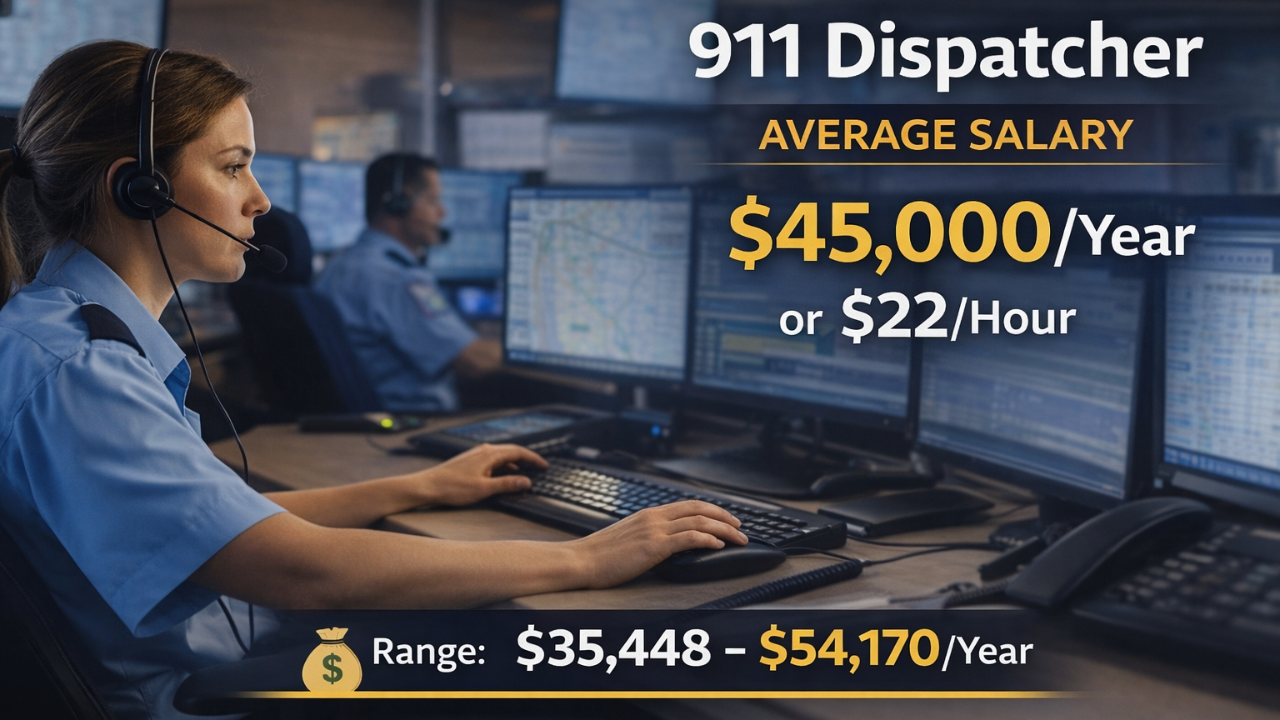
Feb 17, 2026Working as a 911 dispatcher is a critical public safety role, and compensation varies significantly across the country. The average 911 dispatcher salary in the United States is $45,000 per year or $22 per hour, with earnings typically ranging from $35,448 to $54,170 annually. However, I've found that location, experience, and education can dramatically impact what you'll actually take home.
Understanding the full picture of 911 dispatcher compensation goes beyond just the base salary. The highest-paid state for dispatchers is Alaska with an average salary of $46,570 per year, while states like Washington and New York also offer above-average pay. I'll walk you through what influences these salary differences and what you can expect in different regions.

Whether you're considering a career as a 911 dispatcher or looking to understand industry standards, I'll break down the key factors that determine earnings in this essential field. From geographic location to shift differentials and benefits packages, multiple elements combine to create your total compensation as a public safety telecommunicator.
Key Takeaways
- 911 dispatcher salaries average $45,000 annually but vary significantly by state and metropolitan area
- Geographic location, experience level, and education are the primary factors influencing compensation
- Total compensation includes benefits like shift differentials, overtime pay, and comprehensive health insurance beyond base salary
911 Dispatcher Salary Overview
911 dispatcher salaries currently average $19.16 per hour in 2026, with annual compensation typically falling between $35,000 and $54,000 depending on location and experience level. Most dispatchers earn steady wages within established pay ranges, with geographic location being one of the strongest determinants of compensation.
Average Pay and Wage Ranges
The average 911 dispatcher salary stands at $45,000 per year or $22 per hour as of July 2025. Based on current data, dispatcher salary ranges span from $35,257 to $53,979 annually, with the majority of earnings reported between $39,900 and $49,700.
Entry-level dispatchers with 1-3 years of experience earn an average of $47,666, while senior-level dispatchers with 8+ years of experience can reach average salaries of $76,163. Some agencies offer structured pay scales, such as the California Highway Patrol, where Public Safety Dispatchers earn $5,307 to $7,306 monthly and Public Safety Operators earn $4,690 to $6,459 monthly.
Geographic location significantly impacts compensation. States like Washington, District of Columbia, and New York pay above the national average, with Washington offering approximately $7,035 more than the national average, representing a 13.3% increase.
Hourly, Weekly, and Annual Earnings
I've found that hourly rates for 911 dispatchers range from $17 to $26, translating to varying weekly and monthly earnings. At the average rate of $19.16 per hour, a full-time dispatcher working 40 hours per week earns approximately $766 weekly or $3,327 monthly.
Some dispatchers reported total compensation reaching $53,329 per year, with base salaries around $49,418 and additional pay of $3,911 annually. This additional pay can include cash bonuses and other compensation beyond base wages.
Recent and Projected Salary Trends
My research shows that salary data reflects trends through 2025, with the profession maintaining relatively stable compensation structures. Large metropolitan areas with bigger budgets tend to employ more dispatchers at higher salary levels compared to smaller jurisdictions.
State-based salary systems often implement structured progression, where new employees start at minimum rates and advance through the salary range based on satisfactory job performance. This creates predictable earning trajectories for dispatchers throughout their careers.
Factors Influencing 911 Dispatcher Salaries
Multiple elements determine what public safety telecommunicators earn, with experience levels, geographic location, and specialized skills creating significant wage variations. These factors can result in salary differences of thousands of dollars annually between similar positions.
Experience and Career Progression
Entry-level 911 dispatchers typically start at lower pay rates, but compensation increases substantially as they gain experience in emergency call handling. Years of experience in dispatcher roles directly correlate with higher earnings, as seasoned telecommunicators develop critical decision-making abilities and procedural knowledge that agencies value.
Many dispatch centers implement structured pay scales that reward tenure. I've found that agencies often accept formal education as a substitute for experience on a year-by-year basis, allowing newer dispatchers with relevant training to advance more quickly.
Career progression opportunities include moving into supervisory positions, training roles, or specialized units. These advancement paths can boost annual earnings by several thousand dollars beyond standard dispatcher salary ranges.
Geographic Location Differences
Location creates the most dramatic salary variations for public safety telecommunicators. San Francisco offers one of the highest average salaries at $56,200 per year, while smaller cities like Pierre, SD, and Lawton, OK, report considerably lower wages.
States like Washington, District of Columbia, and New York consistently rank above the national average. Washington exceeds the national average by 13.3%, while New York beats it by 9.4%.
Cost of living, local economy strength, and demand for first responders all influence regional pay rates. Urban centers with higher living expenses typically compensate dispatchers more generously than rural areas.
Skills and Certifications Impact
Specialized skills command premium compensation in the public safety telecommunications field. Advanced certifications in emergency medical dispatch, crisis intervention, or specialized communication systems demonstrate enhanced capabilities that agencies actively seek.
Technical proficiency with computer-aided dispatch systems, multi-line phone operations, and radio communications equipment increases earning potential. Bilingual dispatchers often receive additional compensation due to their ability to serve diverse communities during emergencies.
Professional certifications from recognized organizations validate expertise and frequently result in higher base pay or salary supplements. Continued education in emergency management or public safety further distinguishes qualified candidates in competitive job markets.
911 Dispatcher Salary by State and Major Metro Areas
Geographic location significantly impacts how much 911 dispatchers earn across the United States. The variation stems from state budget allocations for emergency communications and differences in metropolitan area living costs.
Top-Paying States
Washington leads the nation in dispatcher salary, with earnings 13.3% above the national average. Alaska ranks as the highest-paid state for dispatchers with an average salary of $46,570 per year.
The District of Columbia and New York follow closely behind Washington in compensation levels. New York beats the national average by 9.4%, while California reported an average annual income of $55,720, nearly $20,000 above the national average.
On the lower end, Arkansas has the lowest dispatcher salaries at $29,291 per year. These regional differences reflect varying state budgets for emergency services and the prioritization of emergency communications infrastructure.
Highest Salaries in Major Cities
Seattle pays dispatchers the most with an average salary of $44,841 per year. Large metropolitan areas generally offer higher compensation due to bigger emergency communications budgets and increased call volumes.
Major metro areas can employ more dispatchers with elevated salaries because their service areas generate more tax revenue. Urban centers require robust emergency communications systems that support larger populations and more complex response coordination.
Cities in states like California, Washington, and New York typically provide the most competitive dispatcher salary packages. The concentration of people and resources in these metropolitan regions creates both greater demand and better funding for emergency services positions.
Regional Cost of Living Adjustments
Dispatcher salaries often reflect local living expenses rather than just the value of the work performed. States with higher costs for housing, transportation, and basic necessities typically compensate emergency communications staff accordingly.
California's elevated salaries align with the state's significantly higher housing and general living costs. Similarly, wages in Seattle and New York correspond to these cities' expensive real estate markets and overall cost structures.
This means a lower dispatcher salary in Arkansas or similar states may provide comparable purchasing power to higher nominal wages in coastal cities. I consider both the raw numbers and local economic conditions when evaluating compensation fairness across different regions.
Benefits and Total Compensation for 911 Dispatchers
When I look at 911 dispatcher total compensation, benefits make up approximately 33.7% of the overall pay package beyond base salary. These benefits include healthcare coverage, retirement contributions, and paid time off that significantly increase the value of dispatcher positions.
Healthcare and Insurance Packages
Healthcare benefits represent a substantial portion of total compensation for public safety telecommunicators. Based on current data, the average healthcare benefit value reaches approximately $6,056 annually for 911 dispatchers.
Most emergency communication centers provide comprehensive medical insurance packages. These typically include dental and vision coverage alongside standard health insurance. I've found that larger metropolitan agencies often offer more robust healthcare options compared to smaller rural centers.
The insurance packages usually cover dependents as well. Many agencies contribute a significant percentage toward premium costs, reducing out-of-pocket expenses for dispatchers and their families.
Retirement Plans and 401k
Retirement benefits form a critical component of dispatcher compensation packages. Public safety telecommunicators working for government agencies typically receive pension plans, while private emergency services may offer 401k programs with employer matching.
Government-employed dispatchers often participate in public employee retirement systems. These defined benefit plans calculate retirement income based on years of service and final salary levels. The employer and employee both contribute to these pension funds throughout the dispatcher's career.
Private sector positions commonly feature 401k plans with varying match percentages. Employer contributions typically range from 3% to 6% of the dispatcher's salary, depending on the organization's policies.
Paid Time Off and Bonuses
Time off benefits for 911 dispatchers average around $5,809 annually in value. This includes vacation days, sick leave, and holiday pay that accumulates based on tenure and agency policies.
Some agencies offer shift differentials as additional compensation. Second shift workers may receive an extra $0.57 per hour, while third shift dispatchers can earn $0.70 more per hour.
Annual bonuses average approximately $898 for dispatchers. These bonuses may be performance-based or provided as year-end compensation. Social Security contributions add another $3,611 to the total benefits package, representing the employer's portion of payroll taxes.
Role and Job Responsibilities of 911 Dispatchers
911 dispatchers serve as the central communications point for coordinating police, fire, and emergency medical services during critical situations. These public safety telecommunicators handle both emergency and non-emergency calls while managing multiple communication systems simultaneously.
Core Duties in Emergency Communications
I've observed that emergency 911 dispatchers coordinate prompt responses to requests for police, fire, sheriff services, and emergency medical assistance. They serve as the initial point of contact for people experiencing emergencies.
The primary responsibilities include:
- Answering emergency and non-emergency calls from the public
- Operating Computer-Aided Dispatch (CAD) software and radio consoles
- Prioritizing incoming requests based on urgency
- Dispatching appropriate personnel and equipment to incident locations
- Managing multiple communication channels simultaneously
- Providing pre-arrival instructions to callers
In 2021, 45 states reported over 213 million total 911 calls, demonstrating the massive scale of emergency communications. I find that dispatchers must maintain constant focus while juggling phone lines, radio channels, and computer screens during each shift.
Position Requirements and Qualifications
Public safety telecommunicators must work in high-stress environments with extended hours, including nights, weekends, and holidays. The role demands flawless performance in time-sensitive situations.
Essential qualifications typically include:
- High school diploma or equivalent
- Strong communication and multi-tasking abilities
- Ability to remain calm under pressure
- Typing proficiency and computer literacy
- Clear speaking voice and active listening skills
I note that position levels vary from Dispatcher I to Dispatcher III, with supervisory roles carrying additional responsibilities. Candidates must demonstrate the cognitive capacity to process information rapidly while making informed decisions that directly impact public safety outcomes.
Frequently Asked Questions
Based on current data, 911 dispatcher salaries average around $45,000 annually, though this varies significantly by location, experience level, and the size of the emergency communications center. Entry-level positions typically start in the mid-$30,000 range, while geographic location can create salary differences of over $15,000 between states.
What is the entry-level salary for a 911 dispatcher?
Entry-level 911 dispatchers typically earn between $35,000 and $39,900 per year when starting their careers. This translates to approximately $17 to $19 per hour for new hires.
I've observed that some regions offer slightly higher starting wages to attract qualified candidates. The initial salary often reflects the training period, during which new dispatchers learn emergency protocols and communication systems.
How do 911 dispatcher salaries vary by state or region?
Geographic location creates substantial salary variations for 911 dispatchers across the United States. Washington State leads with salaries 13.3% above the national average, followed closely by the District of Columbia and New York.
New York beats the national average by 9.4%. Large metropolitan areas with bigger budgets can employ more dispatchers at higher salaries, while smaller communities typically offer lower compensation.
The highest average salary for emergency dispatchers in nonmetropolitan areas reaches $62,440. I find that cost of living and local government budgets play crucial roles in determining regional pay scales.
What factors influence the salary of a 911 dispatcher?
Several key factors determine how much a 911 dispatcher earns. The size of the emergency communications office and its service area significantly impact compensation levels.
Experience and certification level directly affect earning potential. I've noticed that dispatchers with specialized training in emergency medical dispatch or fire communications often command higher salaries.
The employer type matters as well. State agencies, county operations, and municipal departments each have different pay structures and budget constraints that influence compensation.
Are there opportunities for advancement or pay raises as a 911 dispatcher?
Career advancement opportunities exist within emergency communications centers. Dispatchers can move into supervisory roles, training positions, or quality assurance positions that come with increased pay.
Many agencies offer step increases based on years of service. I see regular cost-of-living adjustments and merit-based raises as common practices in established dispatch centers.
Some dispatchers transition into related fields such as emergency management coordination or public safety administration. These lateral moves often provide salary increases and expanded responsibilities.
What benefits and additional compensations are common for 911 dispatchers?
Full benefits packages typically accompany 911 dispatcher positions, including health insurance, retirement plans, and paid time off. Many centers provide shift differential pay for evening, overnight, and weekend hours.
Some agencies offer retention bonuses. Certain centers provide an additional $300 per month as a retention incentive to reduce turnover rates.
I've seen overtime opportunities frequently available due to staffing needs and emergency situations. Holiday pay, uniform allowances, and tuition reimbursement for continuing education are additional benefits some departments provide.
How does experience and training affect a 911 dispatcher's salary?
Experience significantly impacts earning potential for 911 dispatchers. The salary range extends from $35,257 to $53,979 per year, with experienced dispatchers earning at the higher end of this spectrum.
Specialized certifications in emergency medical dispatch, fire dispatch, or police dispatch can increase compensation. I notice that dispatchers who complete advanced training programs often qualify for higher pay grades within their agencies.
Years of service typically correlate with salary increases through step plans or merit-based systems. Top earners in the field report making up to $93,527 annually, representing the 90th percentile of the profession.

