
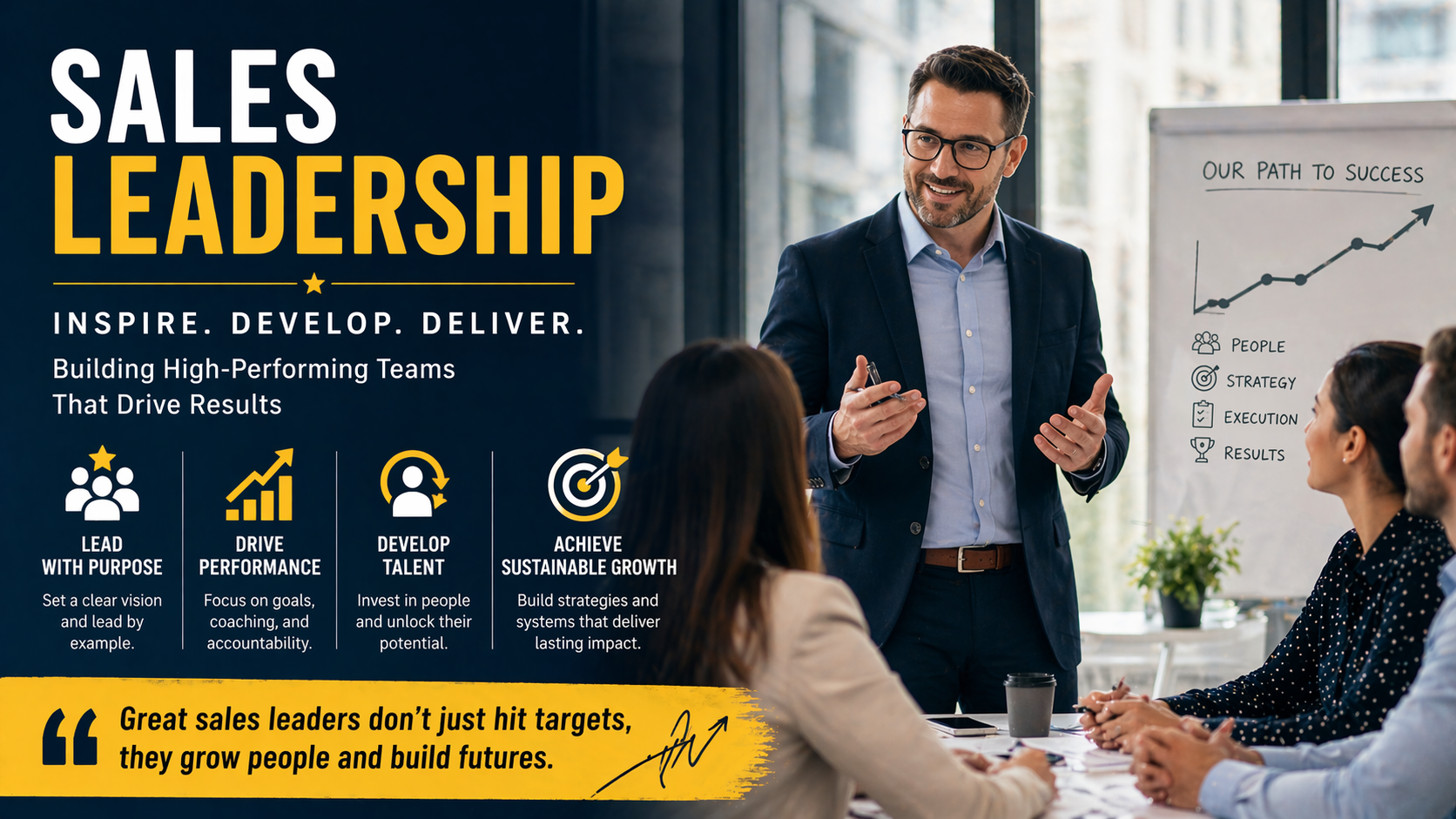
Sales Leadership Strategies for Building High-Performing Teams in 2026
Apr 21, 2026Sales leadership extends beyond managing quotas and closing deals. Effective sales leadership combines the ability to motivate teams, develop individual talent, and create strategies that drive sustainable revenue growth. I've seen firsthand how the right leadership approach transforms average sales teams into high-performing units that consistently exceed targets.
The role requires a unique blend of analytical thinking and emotional intelligence. Sales leadership involves understanding each team member and coaching them toward professional growth while maintaining focus on organizational objectives. The most successful leaders balance data-driven decision making with genuine human connection.
In this guide, I'll walk you through the core qualities and practical skills that separate exceptional sales leaders from the rest. You'll learn how to build a performance-driven culture, implement strategic planning processes, and leverage leadership techniques that improve both revenue results and team retention.
Key Takeaways
- Strong sales leadership requires balancing analytical capabilities with emotional intelligence to motivate and develop team members effectively
- Building a high-performance culture involves strategic planning, consistent coaching, and creating systems that support both individual growth and organizational goals
- Successful sales leaders drive revenue growth while improving retention by fostering trust, providing clear direction, and adapting their approach to team needs
Core Qualities of Outstanding Sales Leaders
Exceptional sales leaders share distinct characteristics that enable them to build high-performing teams and drive consistent results. These qualities range from foundational leadership attributes to specific skills in talent identification and team development.
Leadership Qualities That Set the Benchmark
I've observed that effective sales leadership requires both exceptional selling abilities and emotional intelligence. A strong sales leader must demonstrate integrity in all interactions, making decisions that prioritize long-term team success over short-term gains.
Adaptability stands as a critical trait in today's market. I find that flexibility allows sales leaders to respond swiftly to market changes while maintaining team focus and performance. This agility separates good leaders from great ones.
Communication forms the backbone of effective leadership. I need to articulate vision clearly, provide constructive feedback, and create open dialogue channels. Strong sales leaders also possess strategic thinking capabilities that align team efforts with broader business objectives.
Traits of Successful Sales Leaders
Understanding the market and embracing change distinguishes successful sales leaders from average managers. I must continuously update my knowledge of industry trends, competitive landscapes, and customer behaviors.
Resilience proves essential when facing rejection and setbacks. I've learned that maintaining composure during challenging periods sets the tone for the entire team. Accountability accompanies this resilience—I take responsibility for both successes and failures.
Empathy enables me to understand individual team members' motivations and challenges. Sales leadership involves coaching each member for professional growth rather than applying a one-size-fits-all approach. Data-driven decision-making complements these interpersonal skills, allowing me to identify patterns and optimize strategies based on measurable outcomes.
Lead by Example and Inspire Teams
I demonstrate the behaviors and work ethic I expect from my team. When I lead by example, I create credibility that cannot be established through words alone. This means making calls, attending meetings, and handling difficult conversations with the same professionalism I require from others.
Motivation extends beyond monetary incentives. I inspire my team by celebrating wins, recognizing individual contributions, and maintaining enthusiasm during slower periods. My attitude directly influences team morale and productivity.
I share my experiences, including failures and lessons learned. This vulnerability builds trust and shows that growth comes from continuous improvement. Building a strong sales team through methodical development requires consistent demonstration of the standards I set.
Eye for Talent and Team Building
I've developed the ability to identify potential in candidates beyond their resumes. An eye for talent involves recognizing individuals who possess coachability, drive, and cultural fit alongside basic qualifications.
During interviews, I assess problem-solving approaches and resilience indicators. I look for candidates who ask thoughtful questions and demonstrate genuine interest in the role. Past performance matters, but I prioritize aptitude and attitude over experience alone.
Team composition requires balance. I build teams with complementary strengths, ensuring diversity in selling styles and skill sets. This approach creates opportunities for peer learning and covers various customer preferences.
I invest time in onboarding and development. Identifying strengths and weaknesses in team members allows me to assign territories and accounts strategically. Regular coaching sessions help each person reach their potential while addressing gaps that limit performance.
Essential Skills for Sales Leadership Success
Successful sales leadership requires mastering specific competencies that directly impact team performance and revenue outcomes. I've identified four critical skill areas that separate high-performing sales leaders from those who struggle to drive results.
Problem-Solving Skills and Emotional Intelligence
I've observed that effective sales leadership depends heavily on the ability to navigate complex challenges while managing team dynamics. Problem-solving skills enable me to analyze data, identify root causes of performance gaps, and implement solutions that address both strategic and tactical issues.
Emotional intelligence plays an equally vital role in my leadership approach. I need to recognize and manage my own emotions while understanding how team members respond to pressure, rejection, and competition. This awareness helps me provide appropriate support during difficult periods.
When I combine problem-solving with emotional intelligence, I can address performance issues without damaging relationships. I assess whether a sales rep needs additional training, different resources, or emotional support. This balanced approach prevents me from applying generic solutions to unique situations.
Sales Coaching and Talent Development
My role as a sales coach requires me to develop individual capabilities rather than simply managing activities. I focus on skills that build high-performing teams through personalized coaching sessions that address specific weaknesses.
I structure my coaching around real sales scenarios my team encounters. I review call recordings, analyze deal progression, and provide actionable feedback that reps can immediately apply. This practical approach delivers faster skill development than theoretical training.
Talent development extends beyond coaching to include career pathing and succession planning. I identify high-potential team members and create development plans that prepare them for advancement. I also invest in sales leadership training for emerging leaders to ensure continuity.
I measure coaching effectiveness through performance metrics, not just activity completion. I track conversion rates, deal sizes, and sales cycle length to determine whether my coaching interventions produce measurable improvements.
Communication and Relationship Building
I maintain open communication channels with my team through regular one-on-ones, team meetings, and informal check-ins. Clear communication ensures everyone understands expectations, goals, and how their work contributes to organizational success.
Building trust requires integrity and consistent alignment between my words and actions. I share information transparently, admit mistakes, and follow through on commitments. This authenticity creates psychological safety where team members feel comfortable discussing challenges.
I also prioritize relationship building with cross-functional partners in marketing, product, and customer success. These relationships enable me to secure resources, resolve conflicts, and create unified customer experiences. I facilitate introductions between my sales reps and key stakeholders to strengthen organizational collaboration.
Adapting Leadership Styles
I recognize that different situations and team members require different leadership approaches. I don't apply a single leadership style to every scenario because individual motivations, experience levels, and challenges vary significantly.
For new sales reps, I provide more directive guidance with specific instructions and frequent check-ins. As team members develop competence and confidence, I shift toward a more delegative style that grants autonomy while remaining available for support.
I also adjust my leadership style based on situational factors like market conditions, product launches, or organizational changes. During periods of uncertainty, I increase communication frequency and provide more structure. When the team performs well, I step back and allow them to maintain momentum independently.
Strategic Planning and Execution in Sales
Effective sales leadership requires translating broad objectives into concrete actions that drive revenue. This means establishing clear processes, developing strategies grounded in market realities, leveraging technology for visibility, and ensuring that individual targets support organizational growth.
Defining and Optimizing the Sales Process
I define the sales process as the systematic sequence of steps my team follows from initial prospect contact through deal closure and beyond. A well-documented sales process provides consistency across the organization and creates a framework for coaching and improvement.
My approach starts with mapping each stage: prospecting, qualification, needs analysis, proposal, negotiation, and closing. I assign specific actions and exit criteria to each stage so reps know exactly what constitutes progress. This clarity eliminates confusion about where deals stand and what actions move them forward.
Optimization requires regular analysis of conversion rates between stages. When I notice bottlenecks—perhaps 40% of qualified leads stall during needs analysis—I investigate the root cause. Maybe reps lack discovery skills or our qualification criteria are too loose.
I also build feedback loops where frontline sellers share what's working and what obstacles they encounter. Sales execution strategy embeds these processes into daily workflows and performance reviews to ensure adoption at scale.
Crafting Impactful Sales Strategies
My sales strategy defines how we position our solution, which segments we target, and what messages resonate with buyers. Unlike the sales process, which covers execution mechanics, strategy addresses market positioning and competitive differentiation.
I start by identifying ideal customer profiles based on firmographics, pain points, and buying behavior. This focus prevents my team from chasing poor-fit prospects that drain resources. I then develop value propositions tailored to each segment's specific challenges.
Competitive analysis informs my positioning. I assess competitor strengths, weaknesses, and market messaging to identify gaps we can exploit. This intelligence helps reps handle objections and articulate our unique advantages.
Strategic sales planning aligns goals, resources, and execution through structured frameworks. I document key tactics, assign ownership, and establish metrics to track progress. The strategy must remain flexible enough to adapt when market conditions shift, but structured enough to guide daily decisions.
Utilizing CRM and Sales Forecasting
My CRM system serves as the central repository for customer data, deal progress, and sales activities. Beyond contact management, I use it to gain visibility into pipeline health and rep productivity.
I require consistent data entry with mandatory fields for deal stage, close date, and value. This discipline ensures my forecasts reflect reality rather than optimism. I track leading indicators like meeting volume, proposal conversion rates, and average deal cycle length.
Sales forecasting translates pipeline data into revenue predictions. I segment forecasts by probability: committed deals above 80%, likely deals at 50-80%, and early-stage opportunities below 50%. This tiered approach provides range estimates rather than single-point predictions.
I review pipeline coverage ratios—typically 3:1 or 4:1 depending on our conversion rates—to ensure sufficient opportunities exist to hit targets. When coverage drops, I adjust prospecting activities before shortfalls materialize. My CRM dashboards surface these metrics in real-time so I can course-correct quickly.
Aligning Goals with Sales Quotas
I set sales quotas based on territory potential, historical performance, and company revenue objectives. Quotas must challenge my team while remaining achievable with solid execution.
My quota-setting process begins with top-down revenue targets from the executive team. I then allocate these across territories based on market size, account density, and growth potential. I adjust for rep experience—newer sellers receive ramped quotas that increase over their first year.
I break annual quotas into monthly and quarterly targets to maintain urgency and enable frequent performance check-ins. This granularity helps me identify struggling reps early and provide coaching before they fall too far behind.
Alignment means connecting individual quotas to broader company goals. I communicate how each rep's contribution supports departmental targets and overall business growth. When my team understands this connection, quotas transform from arbitrary numbers into meaningful commitments that drive collective success.
Developing a High-Performance Sales Culture
A strong sales culture requires intentional leadership that creates motivational environments, invests in ongoing skill development, and establishes clear accountability systems. These elements work together to build teams that consistently exceed targets while maintaining sustainable performance standards.
Building a Motivational Environment
I focus on creating a workplace where trust and respect prevent competition from becoming toxic while still driving results. This means recognizing individual achievements publicly and providing specific feedback that connects daily actions to team goals.
My approach includes setting clear expectations and celebrating both wins and learning moments. I establish psychological safety where team members feel comfortable sharing challenges without fear of judgment. This openness encourages collaboration rather than siloed work.
I also ensure that recognition goes beyond top performers. Highlighting progress, improved conversion rates, and creative problem-solving motivates the entire team. When I connect recognition to specific behaviors, I reinforce the actions that drive success and create repeatable patterns across my sales organization.
Encouraging Continuous Sales Training
Sales leaders must take an active role in coaching and mentoring their teams to develop skills systematically. I implement regular training sessions that address both fundamental sales techniques and emerging market trends.
My training strategy includes role-playing exercises, peer learning sessions, and individual coaching conversations. I schedule weekly one-on-ones to review calls, discuss pipeline management, and identify skill gaps. This consistent attention to development keeps my team sharp and adaptable.
I track which training initiatives correlate with improved sales productivity and adjust my programs accordingly. Investing in continuous learning demonstrates my commitment to team growth and helps retain top talent who value professional development opportunities.
Driving Sales Productivity and Accountability
I establish data-driven decision-making processes that connect individual activities to revenue outcomes. Clear metrics help my team understand what success looks like and how their daily work contributes to larger organizational goals.
My accountability framework includes:
- Weekly pipeline reviews with specific conversion rate targets
- Activity metrics tracking calls, meetings, and proposals
- Revenue goals broken down into manageable monthly milestones
- CRM compliance standards to ensure data accuracy
I hold regular performance discussions that focus on both results and behaviors. When team members miss targets, I work with them to identify obstacles and create action plans rather than simply pointing out shortfalls. This coaching-focused approach maintains accountability while supporting growth.
Leveraging Sales Leadership for Growth and Retention
Strong sales leadership directly impacts both revenue expansion and customer loyalty. I focus on retention strategies and cycle optimization to build sustainable business growth.
Enhancing Customer Retention through Leadership
I prioritize customer retention as a core leadership responsibility because keeping existing customers costs significantly less than acquiring new ones. Sales leaders who cultivate a culture of empathy and deep customer understanding create teams that genuinely care about client success.
I train my sales teams to view customer relationships as long-term partnerships rather than one-time transactions. This means regular check-ins, proactive problem-solving, and understanding evolving customer needs.
I implement accountability systems that track customer satisfaction metrics alongside revenue numbers. When team members know their performance includes retention rates, they naturally invest more in relationship quality.
Key retention tactics I use:
- Personalized communication - Tailoring outreach based on customer history and preferences
- Value delivery - Consistently demonstrating ROI beyond the initial sale
- Feedback loops - Creating channels for customers to voice concerns early
I also ensure my team has the authority to resolve issues quickly without bureaucratic delays.
Optimizing the Sales Cycle for Long-Term Success
I analyze each stage of the sales cycle to identify bottlenecks that slow conversions or create customer frustration. Modern sales leaders must combine sales expertise with strategic thinking to streamline processes.
I map out our typical customer journey and measure time spent in each phase. This data reveals where prospects stall and where my team needs additional support or training.
I reduce unnecessary steps that don't add value while ensuring quality touchpoints remain intact. Faster cycles benefit both the business and customers who want efficient purchasing experiences.
Sales cycle optimization areas:
| Stage | Optimization Focus |
|---|---|
| Prospecting | Qualify leads earlier to focus on high-potential opportunities |
| Presentation | Customize demos to address specific pain points |
| Negotiation | Empower reps with flexible pricing authority |
| Closing | Simplify contract processes and reduce approval layers |
I regularly review these processes with my team to incorporate their frontline insights and adjust strategies based on changing market conditions.
Frequently Asked Questions
Sales leaders face recurring challenges around team performance, compensation design, forecasting precision, and cultural cohesion. These questions address the tactical decisions that separate effective leadership from merely managing quotas.
What are the core responsibilities of a high-performing sales leader?
I focus on three primary areas: strategy execution, team development, and revenue accountability. Sales leaders are responsible for driving revenue growth while simultaneously managing teams to achieve organizational goals.
My daily work involves setting clear targets, removing obstacles that prevent my reps from closing deals, and ensuring pipeline quality remains high. I also spend significant time on coaching sessions, one-on-ones, and performance reviews to identify skill gaps before they impact results.
Beyond individual rep management, I develop sales strategies that align with company objectives and market conditions. This means analyzing competitive positioning, refining our value proposition, and adjusting tactics when data shows our approach isn't working.
How do you build and sustain a strong sales culture across a team?
I start by defining specific behaviors I want to see replicated, then I model them consistently. Culture doesn't emerge from mission statements but from the actions leaders reward, tolerate, or discourage through their daily decisions.
Recognition plays a crucial role in reinforcing desired behaviors. I celebrate wins publicly but also acknowledge the efforts that don't immediately convert to revenue, like thorough discovery calls or detailed account planning.
Transparency around expectations and performance data prevents confusion about what success looks like. When everyone can see pipeline metrics, conversion rates, and activity levels, it creates healthy accountability without requiring constant micromanagement.
I also prioritize psychological safety by encouraging my team to share what's not working. Reps who fear admitting struggles won't seek help until deals are already lost, so I create space for honest conversations about challenges.
Which metrics best indicate sales team health and future performance?
I track pipeline velocity because it reveals how quickly deals move through stages, not just how many exist in the funnel. A large pipeline with slow movement often signals qualification problems or ineffective nurturing.
Win rate by deal stage shows me exactly where my team struggles most. If opportunities consistently stall at the demo stage, I know we have a product positioning or presentation issue that needs immediate attention.
Activity metrics like meaningful conversations and discovery calls completed give me leading indicators before revenue numbers reflect problems. I also monitor the ratio of pipeline value to quota, aiming for at least 3x coverage to maintain realistic forecast confidence.
Ramp time for new hires tells me whether my onboarding process actually works. If new reps take longer than expected to hit full productivity, I'm either hiring wrong or training poorly.
How should a sales manager coach underperforming reps to improve results?
I begin with data to identify the specific breakdown point rather than making assumptions about motivation or effort. Successful sales leaders mentor team members by pinpointing exact skill deficiencies through pipeline analysis and call reviews.
If a rep struggles with close rates but has strong discovery metrics, the issue likely involves handling objections or creating urgency. I then create a targeted improvement plan focused on that specific skill through role-play, deal reviews, and shadowing top performers.
I set clear milestones with defined timeframes, typically 30 to 60 days, so both the rep and I know what success looks like. Vague improvement plans without measurable checkpoints rarely change outcomes.
During this period, I increase coaching frequency to weekly or even daily check-ins, depending on urgency. I also remove some quota pressure temporarily so the rep can focus on skill development rather than just activity volume.
If performance doesn't improve after structured coaching with adequate support, I make difficult personnel decisions quickly. Allowing underperformance to continue hurts team morale and sets a precedent that mediocrity is acceptable.
What is the most effective way to design compensation plans that drive the right behaviors?
I keep compensation structures simple enough that reps can calculate their earnings without spreadsheets. Complex plans with multiple modifiers and thresholds create confusion that diminishes motivational impact.
Base salary should cover living expenses while variable compensation represents the upside for exceptional performance. I typically target a 50/50 or 60/40 base-to-variable split depending on sales cycle length and deal complexity.
I align accelerators with behaviors I want to encourage, like higher commission rates for deals above a certain size or for specific product lines. However, I avoid creating so many carve-outs that reps game the system instead of focusing on customer value.
Payment timing matters significantly for motivation. I pay commissions as close to deal closure as possible rather than waiting for cash collection, which can take months and weakens the psychological connection between effort and reward.
I also review compensation plans annually to ensure they still align with company priorities, which shift as organizations grow. What worked at $5 million in revenue rarely makes sense at $50 million.
How can a sales organization improve forecast accuracy without slowing execution?
I implement strict stage definitions with objective exit criteria so pipeline categorization remains consistent across reps. When everyone interprets "qualified opportunity" differently, forecasts become unreliable regardless of methodology.
I require specific evidence for deals in late stages, like identified decision-makers, confirmed budgets, and documented next steps with dates. This prevents wishful thinking from inflating my committed forecast category.
Weekly pipeline reviews focus on deal movement and stagnation rather than just adding new opportunities. I ask detailed questions about deals that haven't progressed in two weeks to surface hidden blockers or qualification problems.
I track individual rep accuracy over time and adjust my confidence levels accordingly. A rep who consistently over-forecasts by 30% gets mentally discounted when I roll up numbers to leadership.
I also separate my forecast into clear categories like commit, best case, and pipeline, each with different confidence thresholds. This gives leadership visibility into risk without forcing me to sandbag or over-promise.

