When Does a New Sales Rep Break Even?
Nov 11, 2026We Set the Ramp by Gut Feel
I once helped scale a new Enterprise sales team fast. We had to decide how long the ramp should be and how long to guarantee each rep's pay. My sales managers and I made both calls by gut feel.
Then one of our finance partners showed us break-even numbers for every ramp and guarantee we were weighing. Our eyes nearly popped out of our heads. 😳
We had never counted how much the company would spend before we made our first dollar from these reps. Enterprise reps cost a lot. Their sales cycles run long. A rep can sit on payroll for months before one deal closes.
I had led sales teams for years. I had never run that math. That was my miss.
We were hiring a whole cohort, not one rep. Every wrong guess got multiplied by every person we hired.
Why Smart Leaders Guess Wrong
Most sales leaders look at quota, ramp, and base pay as three separate decisions. Each one feels reasonable alone. Nobody adds them up.
Here is a simple example. Say a new rep costs you $16,000 a month in salary, benefits, and taxes. In month one, that rep brings in $2,000 in gross profit. You are down $14,000 after one month.
That gap grows every month the rep ramps. The company only breaks even when the total profit from the rep passes the total cost of the rep. That day is often much later than anyone on the team expects.
Long sales cycles make it worse. If your deals take six months to close, a rep can produce close to nothing for half a year while you pay every bill.
What to Count Before You Make the Offer
You need six numbers. Base salary, the cost of benefits and payroll taxes, and the full quota the rep will carry. Then your gross margin, your standard commission rate, and the ramp plan.
The ramp plan is the one most leaders skip. For each month of ramp, decide what share of quota the rep should hit. Then decide what you will pay that month, either a flat guarantee or a commission rate on what the rep closes.
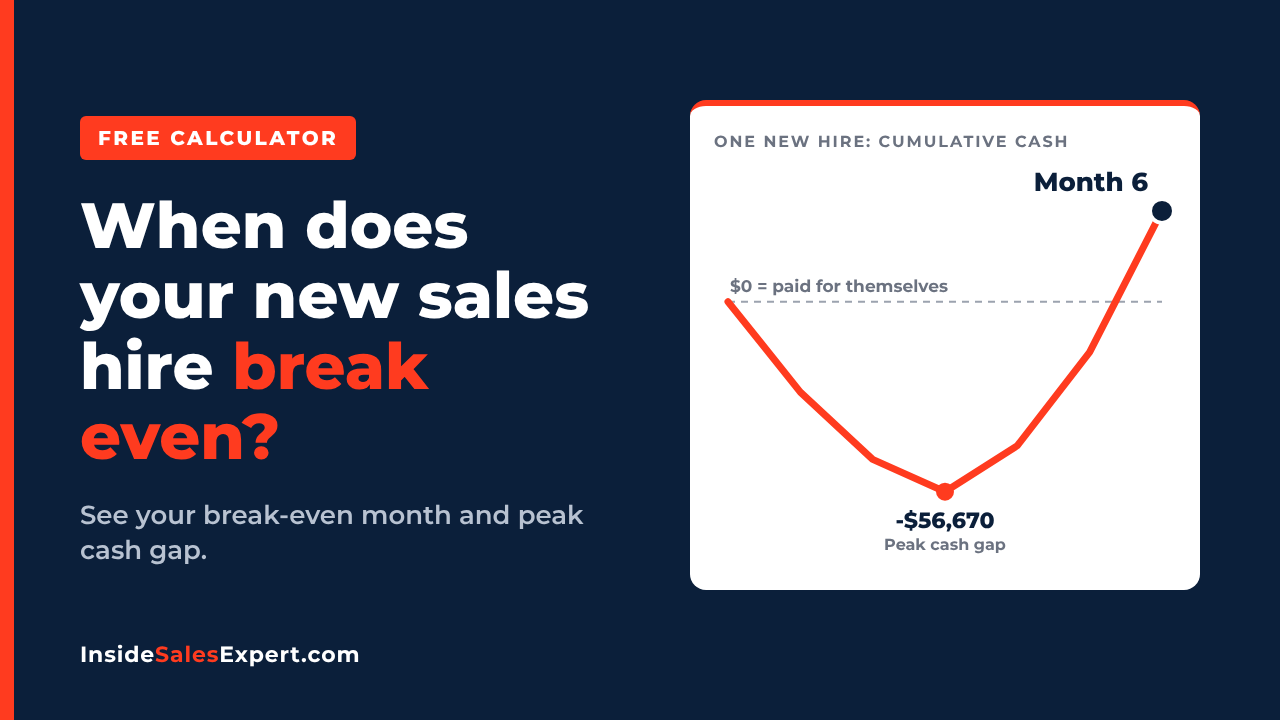
With those numbers you can answer three questions. In what month does this rep pay for themselves? How deep does the cash gap get before then? How much will the company have spent by the day it breaks even?
You can do this in a spreadsheet. It takes time, and one wrong formula throws off the answer. That is why I built a calculator that does it for you.
What the Answer Lets You Decide
Once my team and I saw the break-even month for each option, the ramp and guarantee debate got easy. We stopped arguing opinions. We compared costs.
You can do the same. A shorter guarantee might save real money, or it might cost you the rep you need. A longer ramp might be fair, or it might sink your cash before the rep gets going. Only the numbers tell you which.
The answer also helps you set honest expectations. When a rep asks how long ramp will take, you can answer with facts. When your CEO or CFO asks what this hire will cost, you can show them the peak cash gap before they ask.
It also tells you how many reps you can afford to hire at once. Hire five reps with a $60,000 gap each and you carry $300,000 of cash gap. Better to know that before the offers go out.
Find Your Break-Even Month
I built a free calculator that runs this math for you. Enter your own numbers and it shows the month your new hire breaks even, your peak cash gap, and a month-by-month breakdown. It takes a few minutes. 👇
Use the Free Sales Rep Break-Even Calculator
If you lead sales, run it before your next offer goes out. Then send it to another sales leader who is about to hire.
The lesson for CEOs, founders, and sales leaders: If you can't name the month a new hire breaks even, you are guessing. I guessed for years and paid for it. Run the math before you set the ramp, and make every ramp and guarantee decision with the numbers in front of you.